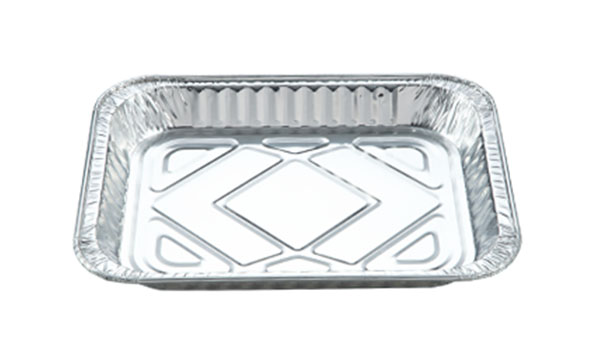
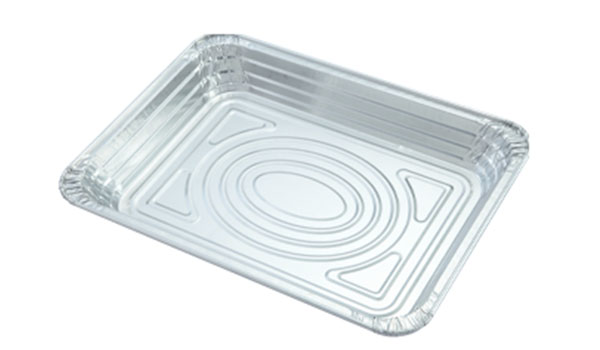
LONDON, Dec. 24 (Xinhua) -- Driven by tightening global environmental regulations and growing consumer preference for sustainable products, aluminum food containers have emerged as a leading alternative to plastic packaging, with the global market poised for robust growth at a CAGR of 5.6% through 2031, latest industry reports show.
The global specialty aluminum packaging market, which includes food containers, reached $5.499 billion in revenue in 2024 and is projected to climb to $7.994 billion by 2031, according to a recent research report. This upward trend is largely fueled by the implementation of plastic restriction policies worldwide. The EU's Single-Use Plastic Directive, China's plastic ban, and similar regulations in California and New York have accelerated the phase-out of plastic tableware, creating massive opportunities for aluminum alternatives.
Aluminum's environmental advantages are a key driver of its growing adoption. Unlike plastic, aluminum can be recycled indefinitely without losing performance, and the energy consumption for recycling is only 5% of that required for primary aluminum production, data from the International Aluminum Association reveals. A study by the European Aluminum Association also shows that aluminum food containers have a 40% lower carbon footprint than plastic counterparts throughout their life cycle.
Major food and beverage brands are increasingly switching to aluminum packaging to enhance their green credentials. Fast-food chains like McDonald's and Starbucks have launched pilot programs using aluminum foil containers in several regions, while a European supermarket chain reported a 30% reduction in packaging waste and an 18% increase in customer repurchase rates after adopting aluminum lunch boxes.
Global manufacturers are ramping up innovation and production to meet the surging demand. Novelis, the world's largest aluminum rolling product manufacturer, has developed ultra-thin can materials that reduce aluminum consumption by 15%. Russia's RUSAL, focusing on recycled aluminum packaging, operates a plant in Krasnoyarsk with an annual capacity of 360,000 tons, whose products emit over 90% less carbon than primary aluminum alternatives. Meanwhile, Constantia Flexibles recently won the Green Packaging Star Award for its low-carbon aluminum lid solution, which cuts CO2 emissions by up to 43% and reduces plastic usage by 25%.
Regional markets show distinct growth characteristics. North America, with its mature food and beverage industry, accounts for 32% of the global market share. Europe, driven by strict environmental regulations, sees booming demand for aluminum foil packaging and recycled aluminum products. The Asia-Pacific region has become the fastest-growing market, with its 2024 market size reaching $1.85 billion, led by consumption upgrades and manufacturing shifts in China and India.
Industry experts predict that aluminum food containers will continue to expand their application scenarios, from takeout and prepared meals to high-end food and pharmaceutical packaging. "As technology advances, aluminum packaging is evolving from a single functional solution to a composite one that combines sustainability and functionality," said an industry analyst. "Companies that grasp these trends will gain a competitive edge in the green packaging revolution."