Choosing the right food packaging material is an important decision for restaurants, catering companies, food manufacturers, wholesalers, and importers. Packaging affects food presentation, transportation, storage, operating costs, and the overall customer experience.
Two widely used options are aluminum foil containers and plastic food containers. Each material offers different advantages, and the best choice depends on the food product, packaging requirements, budget, and intended use.
In this guide, we compare aluminum foil containers vs. plastic food containers to help food businesses and packaging buyers make an informed decision.
Aluminum foil food containers are made from formed aluminum foil and are commonly used for prepared meals, baking, roasting, catering, takeaway, and food packaging.
Plastic food containers are made from different types of plastic materials, such as polypropylene (PP), polyethylene terephthalate (PET), and other polymers. Their applications vary depending on the material, design, and temperature requirements.
Both packaging types are available in different shapes, sizes, capacities, and lid designs.
However, they are not interchangeable in every application.
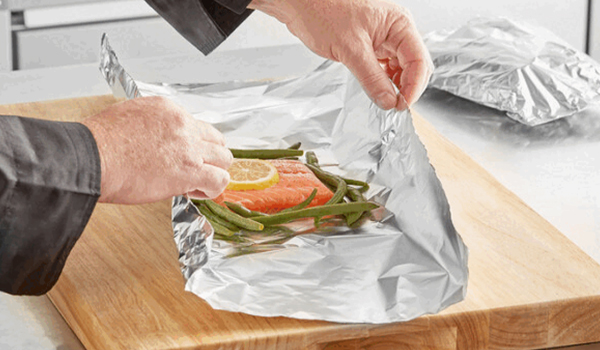
Aluminum foil containers are commonly used in oven cooking, baking, roasting, and packaging hot foods because aluminum can withstand high temperatures under suitable conditions.
They are practical options for roasted chicken, baked pasta, casseroles, prepared meals, and catering dishes.
Plastic food containers have different temperature limitations depending on the plastic material and product design. Some are suitable for hot food, microwave heating, or specific food preparation applications, while others are designed primarily for cold food or room-temperature use.
Always check the manufacturer's temperature specifications before heating or cooking food in either type of container.
Both aluminum foil and plastic food containers are lightweight packaging options.
Plastic containers are often valued for their lightweight structure and flexibility, while aluminum foil containers can also be lightweight and stackable depending on their shape and thickness.
For wholesalers and importers, the total shipping cost depends not only on the material but also on carton dimensions, packing quantity, container nesting, product weight, and shipping method.
Comparing packaging specifications is therefore important when calculating the total landed cost.
Plastic containers are often transparent, allowing customers to see the food inside. This can be useful for supermarket displays, refrigerated meals, salads, desserts, and retail food packaging.
Aluminum foil containers have a metallic appearance and are commonly used for hot meals, takeaway dishes, baked products, and catering applications.
The choice depends on whether product visibility, presentation, heat handling, or the intended food service process is more important.
The durability of both packaging materials depends on their thickness, design, shape, and quality.
Plastic containers may offer flexibility and resistance to certain handling impacts, depending on the plastic type and structure.
Aluminum foil containers can provide practical packaging performance for many food applications, but thinner products may deform if subjected to excessive pressure.
For wholesale purchasing, buyers should compare actual samples and specifications rather than evaluating products based only on photographs.
Aluminum foil containers are widely used for packaging hot meals and food prepared in ovens.
Their thermal conductivity makes them suitable for applications such as baking and roasting when the product is designed for those uses.
Restaurants, catering companies, and food manufacturers often select aluminum foil trays for prepared meals and hot food packaging.
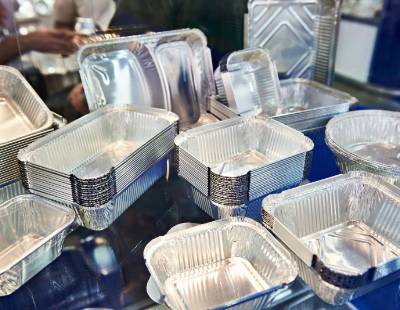
Aluminum foil containers are available in many designs, including:
Rectangular aluminum foil containers
Round aluminum foil containers
Compartment aluminum foil containers
Deep aluminum foil pans
Baking and roasting trays
Aluminum foil containers with compatible lids
This variety allows businesses to choose packaging according to food portions, product dimensions, and serving requirements.
Aluminum foil trays are commonly used for takeaway meals, catering events, roasted food, baked dishes, and larger food portions.
Different capacities can accommodate individual meals, family-sized servings, and bulk food preparation.
Aluminum is a recyclable material, and aluminum food packaging may be recyclable where suitable collection and recycling facilities are available.
Actual recycling conditions depend on local systems, contamination levels, and regional regulations.
Businesses targeting different markets should verify local recycling requirements before making environmental claims about their packaging.
Transparent plastic containers allow customers to see the contents without opening the packaging.
This can be beneficial for retail displays, salads, cold meals, desserts, and food products where appearance is important.
Plastic packaging is available in a wide range of designs, including hinged containers, bowls, trays, clamshell boxes, and containers with snap-on lids.
Different materials and structures offer different packaging characteristics.
Plastic food containers can be suitable for cold food, refrigerated meals, takeaway products, and selected hot food applications when the material is designed for the intended temperature and use.
Buyers should confirm food-contact suitability and heating instructions for each product.
Some plastic food containers may offer competitive unit prices, depending on the material, design, quantity, and supplier.
However, buyers should compare the complete purchasing cost, including packaging, shipping, storage, product performance, and the requirements of their customers.
The lowest unit price is not always the most cost-effective option for a business.
| Feature | Aluminum Foil Containers | Plastic Food Containers |
|---|---|---|
| Material | Aluminum | Various plastic materials |
| Hot food applications | Suitable for many hot food uses | Depends on material and design |
| Oven use | Many containers are oven-suitable | Only products specifically designed for oven use |
| Microwave use | Generally not suitable | Some products may be microwave-safe |
| Transparency | Opaque, metallic appearance | Many options are transparent |
| Product shapes | Round, rectangular, compartment, deep trays | Bowls, trays, clamshells, boxes, and more |
| Weight | Lightweight, depending on thickness | Generally lightweight |
| Food presentation | Suitable for hot meals and baked dishes | Useful when food visibility is important |
| Recycling | Recyclable where local facilities accept it | Depends on plastic type and local facilities |
| Common applications | Roasting, baking, catering, takeaway | Cold food, retail, takeaway, salads, and selected hot food |
The table provides a general comparison. Actual product performance depends on material specifications, design, and manufacturer instructions.
For restaurants selling hot meals, roasted food, rice dishes, pasta, and baked products, aluminum foil containers can be a practical option.
Plastic containers may be more suitable for cold meals, salads, desserts, or food products that benefit from transparent packaging.
Many restaurants use both types of packaging for different menu items.
Catering businesses often require packaging for large portions, hot meals, events, and food transportation.
Aluminum foil trays can be useful for bulk food preparation, baking, roasting, and serving.
The appropriate container size and lid design should be selected according to food quantity and transportation requirements.
Food manufacturers should select packaging according to their processing conditions, product characteristics, storage requirements, and distribution channels.
Aluminum and plastic packaging may both be suitable for different product categories.
Before purchasing in bulk, businesses should conduct product compatibility and performance testing.
Wholesalers and importers need to consider more than the material itself.
Important purchasing factors include:
Product specifications and dimensions
Material thickness and weight
Lid compatibility
Packaging quantity per carton
Carton dimensions and shipping volume
Minimum order quantity
Customization options
Supply consistency
Target market requirements
A reliable supplier should provide clear specifications to support purchasing decisions.
There is no universal answer to whether aluminum foil containers or plastic food containers are cheaper.
The cost depends on several factors:
Raw material prices
Container size and design
Material thickness
Manufacturing process
Order quantity
Packaging method
Shipping costs
Import duties and taxes
Product damage and performance requirements
For wholesale buyers, comparing quotations using the same container dimensions, capacity, packaging quantity, and specifications is the best way to evaluate pricing.
When importing food packaging, it is also important to calculate the total landed cost instead of comparing only the factory or supplier unit price.
Whether you choose aluminum foil containers or plastic food containers, supplier selection is important for long-term business operations.
Before placing an order, consider the following questions:
Does the supplier offer the container sizes and designs you need?
Can they provide clear material and product specifications?
Are compatible lids available?
Can product samples be provided for testing?
What is the minimum order quantity?
How are products packed for international transportation?
Can customized packaging be arranged?
Does the supplier have experience serving export markets?
For importers and distributors, clear communication and consistent product specifications can help reduce purchasing risks.
If your business focuses on takeaway meals, catering, baked food, roasted dishes, and prepared meals, aluminum foil containers may be worth considering as part of your food packaging range.
At MingTan, we offer different aluminum foil food packaging options for international business customers, including:
Standard aluminum foil containers
Aluminum foil containers with lids
Round aluminum foil containers
Compartment aluminum foil containers
Aluminum foil baking and roasting trays
We welcome inquiries from wholesalers, importers, distributors, restaurant suppliers, and food packaging businesses looking for suitable products for their markets.
Aluminum foil containers and plastic food containers both have advantages. The right packaging depends on your food products, heating requirements, presentation preferences, budget, transportation conditions, and target customers.
Aluminum foil containers are particularly worth considering for hot food packaging, baking, roasting, catering, and takeaway applications. Plastic food containers can be useful for transparent packaging, cold food, and other applications where specific plastic designs meet the required performance standards.
For businesses purchasing packaging in bulk, comparing product specifications, samples, packaging details, and total landed costs is essential.
Looking for wholesale aluminum foil food containers? Contact MingTan to discuss your required sizes, product specifications, order quantity, and destination market. Our team can help you explore suitable aluminum foil packaging options for your business.