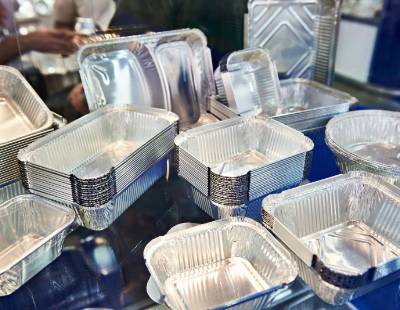
Aluminum foil containers are widely used in restaurants, catering businesses, food processing, baking, and takeaway food packaging. However, one common question among food businesses and consumers is: Are aluminum foil containers safe for oven use?
The short answer is yes. Many aluminum foil containers are suitable for conventional oven use, making them a practical option for baking, roasting, reheating, and preparing different types of food.
However, not every container, lid, or packaging combination is designed for the same heating conditions. Understanding the correct usage instructions is important for food safety, product performance, and packaging selection.
In this guide, we explain how to use aluminum foil containers in ovens, what precautions to follow, and how to choose suitable products for commercial food packaging.
Yes. Aluminum foil containers designed for oven use can generally be placed in conventional ovens.
Aluminum is a good conductor of heat, allowing heat to transfer efficiently to food during baking and roasting. Disposable aluminum foil trays are commonly used for:
Roasted chicken and meat
Baked pasta and lasagna
Roasted vegetables
Cakes and desserts
Casseroles and prepared meals
Catering and large food portions
For restaurants, bakeries, catering companies, and food manufacturers, aluminum foil containers offer a convenient option for preparing and packaging many types of hot food.
However, always check the product specifications and manufacturer's instructions before using a particular container in an oven.
There are several reasons why aluminum foil containers are commonly selected for oven-based food applications.
Aluminum transfers heat efficiently, making it useful for baking, roasting, and other cooking applications.
This property helps distribute heat through the container and into the food.
Aluminum foil containers are available in different shapes, depths, and capacities.
Depending on the design, they can be used for individual meals, family-sized portions, baked dishes, roasted food, and catering applications.
Compared with many traditional reusable baking dishes, disposable aluminum foil trays are lightweight and convenient to handle.
They are also available in stackable designs, which can help businesses manage storage and packaging.
Commercial aluminum foil packaging is available in various product designs, including:
Rectangular aluminum foil containers
Round aluminum foil containers
Deep aluminum foil baking pans
Compartment aluminum foil containers
Aluminum foil roasting trays
Aluminum foil containers with compatible lids
These options allow businesses to select products according to their food preparation and packaging requirements.
One of the most important questions for buyers is the maximum temperature an aluminum foil container can withstand.
There is no single temperature limit that applies to every disposable aluminum foil container.
The actual performance depends on factors such as:
Aluminum material specifications
Container thickness and weight
Product shape and dimensions
Manufacturing quality
Food weight and distribution
Whether the product includes coatings or other materials
For this reason, buyers should request the supplier's recommended operating temperature and testing information for the specific product model.
Do not assume that every aluminum foil container has the same temperature rating.
For commercial food applications, confirming the product specifications before bulk purchasing is particularly important.
Although many aluminum foil containers are suitable for conventional oven use, following basic handling precautions is essential.
Always confirm that the specific container is designed for oven applications.
If the packaging includes a printed temperature limit or heating instructions, follow those instructions.
Not all lids are oven-safe.
Plastic lids and many paperboard lids should be removed before placing the container in a conventional oven unless the lid manufacturer specifically confirms that they are suitable for the intended temperature and heating conditions.
If you need to cover food during baking, use a suitable oven-safe cover.
Some disposable aluminum foil containers have relatively thin walls and flexible bases.
When filled with food, especially liquids or heavy dishes, they may bend during handling.
Placing the container on a rigid baking sheet before filling it or putting it into the oven provides better support.
Always use suitable oven gloves when handling hot containers.
Position containers according to the oven manufacturer's instructions.
Do not allow the container to touch heating elements or other prohibited surfaces.
For broiling or direct high-intensity heat, only use products specifically approved for that application.
Aluminum can react with certain highly acidic or salty foods, especially during prolonged contact.
For dishes containing ingredients such as tomato sauce, citrus, or vinegar, check the container manufacturer's recommendations and consider using an appropriate alternative or validated food-contact solution.
Cooking time and temperature depend on the food, container dimensions, oven type, and food quantity.
Do not use a general temperature recommendation as a substitute for product-specific instructions.
This depends on the material of the lid.
An aluminum foil lid may be suitable for certain oven applications if the manufacturer confirms its intended use.
However, the lid design and heating instructions should always be checked.
Most ordinary plastic lids are not intended for conventional oven use.
Remove them before heating unless the product is specifically designed and tested for the intended oven conditions.
Paperboard lids are often used for takeaway packaging and food presentation.
Their oven suitability depends on their material composition, coatings, adhesives, and design.
Unless the manufacturer explicitly approves oven use, remove them before heating.
For wholesale buyers, it is important to confirm container and lid compatibility as separate product specifications.
This is an important distinction.
Being suitable for a conventional oven does not automatically mean that an aluminum foil container is microwave-safe.
Metal reflects microwave energy and can cause electrical arcing under certain conditions.
Some specially designed food packaging may have specific microwave-use instructions, but ordinary aluminum foil containers should not be placed in a microwave unless the packaging manufacturer and microwave appliance instructions explicitly permit that use.
For general food reheating, transfer the food to a suitable microwave-safe container when no approved microwave instructions are provided.
Different food businesses require different packaging designs.
Rectangular containers are commonly used for baked pasta, roasted food, prepared meals, and takeaway dishes.
They are available in different depths and capacities.
Round foil containers can be used for selected bakery products, desserts, individual meals, and other food applications.
Deep aluminum foil pans are useful for larger food portions, casseroles, roasted dishes, and catering applications.
Compartment designs can separate different food items within the same package.
They may be suitable for selected prepared meals and food service applications.
Roasting trays are commonly used for chicken, meat, vegetables, and larger baked dishes.
The appropriate design depends on food weight, cooking conditions, and handling requirements.
If you are an importer, wholesaler, distributor, or food packaging supplier, product specifications should be confirmed before placing a bulk order.
Here are some important factors to consider.
Select the appropriate length, width, depth, and capacity for your target food applications.
Thickness and product weight can affect rigidity and handling performance.
Ask suppliers for the actual specifications of each model.
If your customers require containers for high-temperature baking or roasting, confirm the recommended temperature range and intended application.
Determine whether compatible aluminum foil, plastic, or paperboard lids are available and whether they have separate heating limitations.
Confirm the number of containers per sleeve, sleeves per carton, carton dimensions, and gross weight.
These details help importers calculate storage and transportation requirements.
Before placing a large order, request samples and evaluate the products under the intended operating conditions.
For commercial buyers, testing the actual container and lid combination is an important step.
Aluminum foil containers are a practical packaging option for many food businesses that require products suitable for baking, roasting, catering, and hot food applications.
At MingTan, we offer a range of aluminum foil food packaging products for international business customers, including:
Standard aluminum foil containers
Aluminum foil containers with lids
Round aluminum foil containers
Compartment aluminum foil containers
Aluminum foil baking and roasting trays
Other aluminum foil food packaging products
We welcome inquiries from international wholesalers, importers, distributors, and food packaging businesses.
Whether you are sourcing standard products or exploring customized packaging options, our team can help you discuss suitable product specifications according to your requirements.
Many disposable aluminum foil containers are designed for conventional oven baking. Always confirm the product's intended use and follow the manufacturer's temperature instructions.
This depends on the container's design and the food weight. Thin or flexible containers are generally easier and safer to handle when supported by a rigid baking tray. Follow the manufacturer's instructions.
Ordinary plastic lids should be removed before oven heating unless they are specifically designed and approved for the intended oven conditions.
Ordinary metal aluminum foil containers are generally not suitable for microwave use. Only use specially designed packaging when both the product instructions and appliance manual permit it.
Oven-suitable aluminum foil trays are commonly used for roasting chicken and other foods. Choose an appropriate size and strength, support the container, and follow the product instructions.
Aluminum foil containers are widely used in baking, roasting, catering, and hot food packaging because of their heat-conducting properties, lightweight design, and product versatility.
However, choosing the right container requires attention to material specifications, thickness, temperature limits, lid compatibility, and intended applications.
For wholesalers and importers, working with a reliable supplier and confirming product specifications before bulk purchasing can help ensure that the packaging meets customer requirements.
Looking for wholesale aluminum foil containers for baking, roasting, or food packaging?
Contact MingTan to discuss your required sizes, product specifications, order quantities, and destination market.
Our team welcomes inquiries from food packaging wholesalers, importers, and distributors worldwide.